Table of contents
Why Underwriters Laboratories play a key role in material and product safety
Underwriters Laboratories is a globally established institution that defines safety standards and develops test methods that serve as a reliable basis in many industries. UL certifications provide designers, procurers and manufacturers with guidance when it comes to assessing materials in terms of their safety and suitability for specific areas of application. This is particularly relevant for plastics, whose fire behaviour is a critical factor for many applications.
This importance is reflected, among other things, in the UL 94 test standard, a globally recognised standard for classifying the flammability of plastics.
Who the Underwriters Laboratories are
Underwriters Laboratories (UL) is an independent US organisation that tests products, materials and systems for their safety. Its role is comparable to institutions such as TÜV or VDE, but with a stronger international focus.
UL develops standards, carries out tests and publishes certifications that are recognised worldwide as a reference - for example in electrical engineering, mechanical engineering, the railway industry and industrial plant construction.
Why UL tests are so relevant internationally
UL standards are globally established because they:
offer uniform, reproducible test procedures,
are internationally recognised and thus simplify supply chains,
clearly assess the safety of materials,
and help companies to fulfil regulatory requirements efficiently.
For companies like STAUFF, UL standardisation is therefore an important reference for offering high-quality products for safety-relevant industries.
UL 94 as an important fire classification for plastics
The UL 94 standard is an important classification for assessing the fire behaviour of plastics.
It determines how quickly a material burns, whether it self-extinguishes and whether burning droplets are produced.
Important here:
UL 94 only rates the material - not the finished product.
The results appear in the so-called UL Yellow Card, which documents all tested material properties and is publicly accessible. The following therefore applies to STAUFF: It is not us, but the manufacturer of our materials and their factories that are audited and certified.
Horizontal and vertical flammability tests according to UL 94
UL 94 HB - Horizontal flammability test
In this test, a sample is clamped horizontally and exposed to a flame. The burning rate is assessed.
This is the less stringent variant of the UL tests.
UL 94 V - Vertical burning test
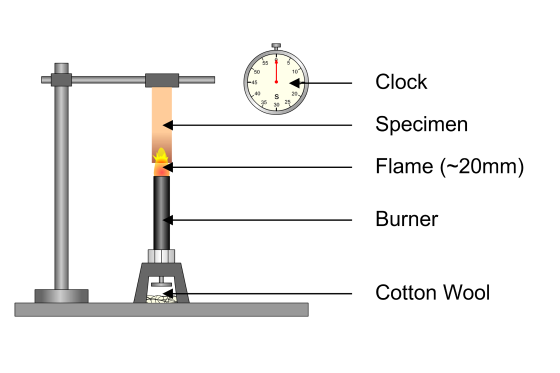
The more stringent test is performed vertically:
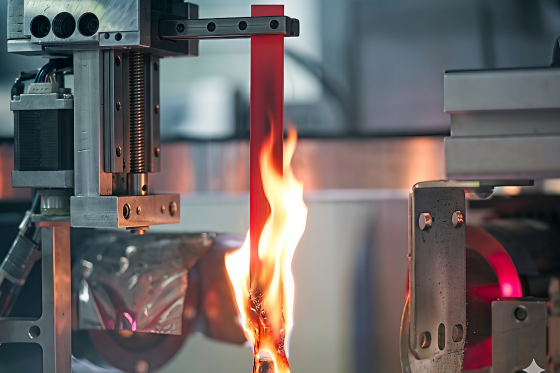
A sample is flamed twice for 10 seconds each time and then evaluated in terms of burning time and dripping behaviour.
This method is closer to real installation situations (e.g. cable routing, installation in switch cabinets) and therefore more relevant for safety-critical industries.
In the video below you can see a PA-V0 clamp in the vertical fire test:
The UL-94 fire classes at a glance
The most important vertical classifications are
V-2: Extinguishing within 30 s; burning droplets permitted
V-1: Extinguishing within 30 s; no burning droplets
V-0: Extinguishing within 10 s; no burning droplets - highest classification
Class V-0 materials are primarily used where maximum safety is required.
In addition, the UL 94 standard defines further fire classes, for example for horizontal burning behaviour (HB), particularly high flame retardancy requirements (5VA / 5VB), very thin-walled materials (VTM classes) or foamed plastics (HF classes). However, these classifications are not discussed in detail in this article.
Typical areas of application for UL-approved plastics
UL-certified plastics can be found in many safety-relevant applications, including
Electrical engineering: device housings, cable holders, control cabinets
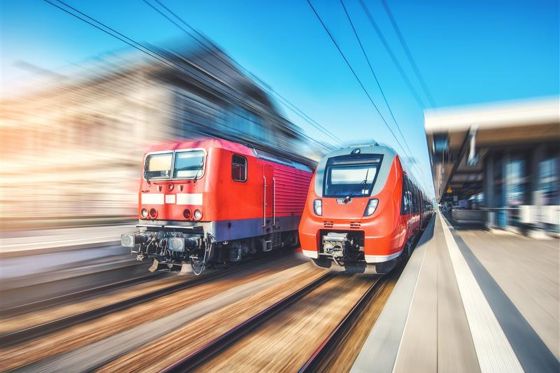
Railway technology: components in the interior, cable management, fastening systems
Industry and infrastructure: plant engineering, energy supply, transport technology
High security areas: Applications where fire incidents would be particularly critical
The standard makes it easier for designers worldwide to select suitable materials.
Practical example from the world of STAUFF
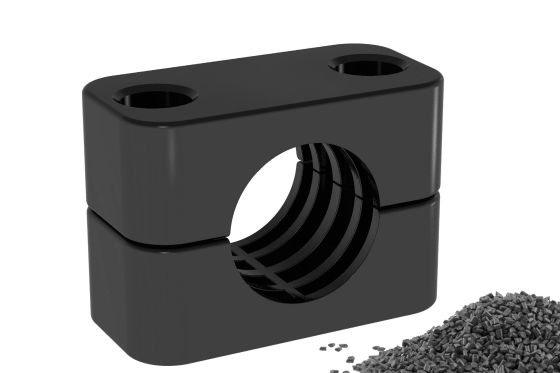
Tube, hose and cable clamps from STAUFF made from PA-V0 and PP-V0 are a practical application:
The material benefits include
excellent mechanical performance
No burning dripping, quick self-extinguishing after removing the flame
High suitability for safety-relevant industries
Our PA-V0 material complies with the requirements of EN 45545-2 for railway applications in Europe. The sets of requirements (R22/R23) that we have tested include testing in accordance with UL 94-V0.
FAQs
What are the Underwriters Laboratories?
Underwriters Laboratories (UL) is an independent organisation that tests and classifies materials and products according to globally recognised safety standards. UL standards serve as a guide for designers and manufacturers.
What does UL 94 mean?
UL 94 is a test standard that evaluates the fire behaviour of plastics. It classifies materials according to their flammability, self-extinguishing and dripping behaviour. This classification is used internationally.
What is the difference between UL 94 HB and UL 94 V?
UL 94 HB is a horizontal burning test and assesses the burning rate of a material. UL 94 V is more stringent and tests a vertically clamped sample for burning time and burning droplets. The vertical classes are more relevant for safety-critical applications.
Are products or materials tested according to UL 94?
Only the material is tested, not the finished product. The UL classification of a material is therefore decisive for the safety of the entire component.
What does UL 94 V-0 mean?
UL 94 V-0 is the highest classification of the vertical flammability test. A material must self-extinguish within 10 seconds and must not form burning droplets. This class is often required in railway, electrical and industrial applications.

Newsletter subscription
Subscribe now and don't miss any new articles!