Table of contents
When troubleshooting becomes a time-consuming process
Hydraulic systems are significantly easier to commission, maintain and optimise if diagnostic points are incorporated right from the design stage. They enable the rapid identification of fault causes, provide transparency regarding the system’s condition and support both preventive maintenance measures and modern condition monitoring concepts. Instead of having to rely on guesswork or labour-intensive dismantling work, users gain direct access to relevant operating data.
Many problems in hydraulic systems initially manifest themselves only indirectly. Cycle times increase, movements become less precise, or performance declines. However, the actual cause may lie in completely different parts of the system. Without defined measurement capabilities, troubleshooting often remains a combination of experience, a process of elimination and time-consuming interventions in the system.
The more complex a machine’s design, the more important a systematic approach to operational data becomes. Design engineers, commissioning engineers and service technicians need measurement points to be able to quickly assess the condition of the plant and narrow down sources of faults. This saves time, reduces downtime and facilitates the overall lifecycle management of a plant.
STAUFF in the trade press
In line with this topic, a relevant article has been published in the August issue of the trade magazine “der Konstrukteur”.
The best diagnostic points are designed on the drawing board
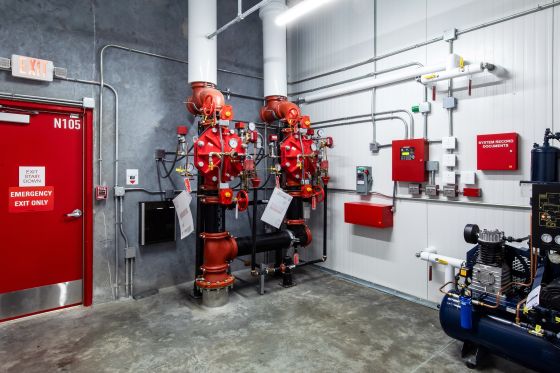
Diagnostic capability can only be retrofitted to a limited extent. That is why relevant measurement points should be taken into account right from the design stage of a hydraulic system. Planning them in from the outset lays the foundations for efficient commissioning and subsequent condition monitoring.
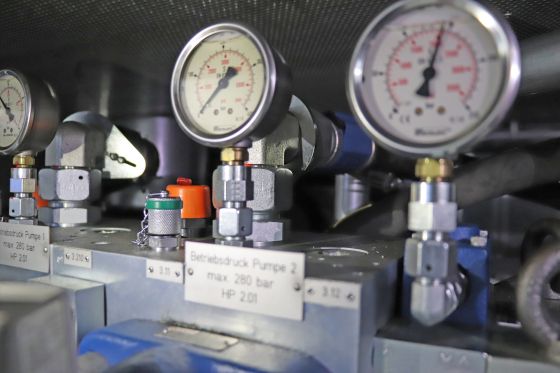
An important measurement point is located directly at the pump outlet. This is where the system pressure is recorded and compared with the design values. Deviations can thus be detected at an early stage and often traced directly to the pressure generation process.
Measurement points upstream and downstream of filters and valves have also proven their worth. By comparing the pressure readings, it is possible to determine whether a filter is blocked or whether unnecessary pressure losses are occurring. Measuring directly at the consumer, on the other hand, reveals the actual pressure available for operation. This measuring point often provides crucial information, particularly in the event of performance issues.
Additional measuring points in pressure lines or in the return line complete the picture and enable a holistic assessment of the system’s behaviour.
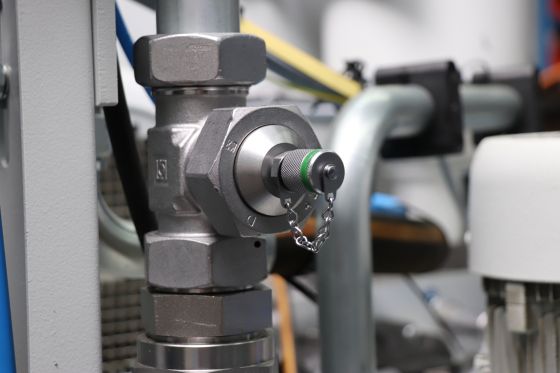
Accurate measurements require the right position
Not every measurement point that makes sense in theory delivers the desired benefits in practice. Accessibility is also crucial. Measurement points are only used regularly if they can be accessed safely and easily during day-to-day operations.
If measuring points are located in confined spaces or in the immediate vicinity of hot or rotating components, measurements are often made more difficult or avoided altogether. This not only gives rise to safety risks, but often also leads to gaps in information during maintenance and fault-finding.
A maintenance-friendly design therefore takes into account not only the position in the hydraulic diagram, but also practical on-site use. After all, the true added value of a diagnostic concept only becomes apparent when the information obtained is readily available without significant effort.
Small components with great benefits
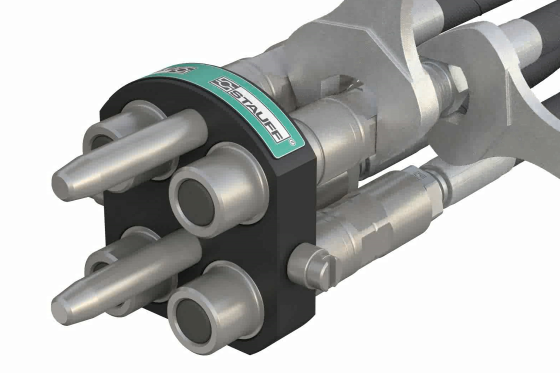
Test Couplings are among the more inconspicuous components of a hydraulic system. However, their contribution to diagnostic capability is considerable. They provide a safe and permanently available interface between the system and the measurement equipment.
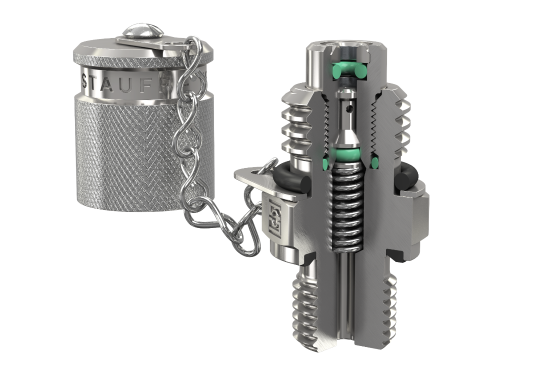
The integrated valve ensures that measuring instruments can be connected without hydraulic fluid leaking out or air entering the system. This allows many tests to be carried out directly whilst the system is in operation. This saves time and significantly reduces the effort required for diagnostic and maintenance work.
Maintenance becomes proactive rather than reactive
The earlier changes in the system are detected, the better maintenance measures can be planned. This is precisely where a key advantage of defined measurement points lies. They enable regular checks and provide comparative data over longer periods.
Rising differential pressures across filters, changes in operating pressures or abnormalities in the hydraulic fluid can be early indicators of wear or contamination. Instead of reacting to breakdowns, operators can prepare for and carry out maintenance work in a targeted manner.
This not only improves the plant’s availability but also contributes to more cost-effective operation. Unplanned downtime can be reduced and resources deployed more effectively.
Why modern diagnostic concepts operate on two levels
Modern hydraulic systems have long since ceased to rely exclusively on one-off measurements. For condition monitoring and data-based maintenance strategies, permanently installed sensors are increasingly being used to continuously monitor pressure, temperature, flow rate or the condition of the oil.

Nevertheless, traditional diagnostic interfaces remain indispensable. Test Couplings and measurement points make it possible to verify sensor data, carry out additional tests or continue to access important operating data in the event of a sensor failure.
An effective diagnostic concept therefore combines both approaches. Permanently installed sensor technology provides continuous condition information, whilst defined measurement points allow for flexible and independent analyses. It is only the interaction between these two levels that creates the basis for reliable condition monitoring and a future-proof maintenance strategy.
From the diagnostic interface to condition monitoring: how STAUFF supports you
The requirements for the diagnostic capability of hydraulic systems are diverse. In addition to the strategically correct placement of measurement points, reliable components and suitable measurement technology are essential. This is precisely where the STAUFF portfolio comes into play.
With its STAUFF Test product range, STAUFF provides diagnostic interfaces for a variety of hydraulic applications. The portfolio includes Test Couplings with Ball or Poppet Valves, test hoses, adaptors and other accessories for Pressure Measurements, differential pressure measurements, fluid sampling and servicing. These components enable a secure and permanently available connection of test and measuring equipment during commissioning, maintenance and troubleshooting.
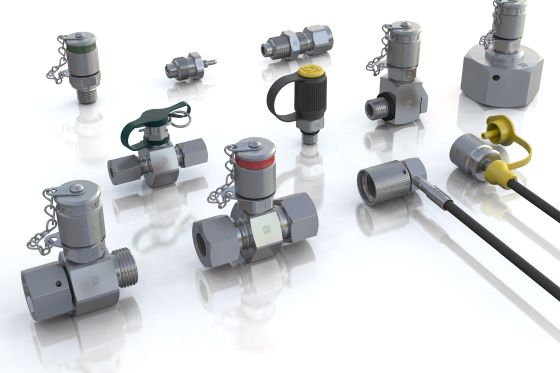
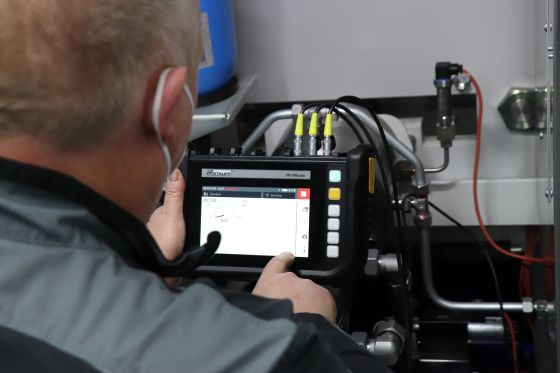
For applications that go beyond one-off measurements, STAUFF complements its range with solutions for continuous condition monitoring. These include, amongst other things, digital measuring instruments, hydraulic testers and sensors for measuring pressure, temperature, flow rate and oil condition. This allows traditional diagnostic interfaces to be combined with modern condition monitoring concepts.
The benefit for machine builders, plant operators and maintenance engineers is that the mechanical diagnostic level and electronic condition monitoring are interlinked. This enables operating conditions to be assessed precisely, sensor data to be verified and well-informed decisions to be made regarding maintenance and plant optimisation.
STAUFF Test: Diagnostic interfaces for hydraulic systems
Test Couplings, measuring hoses, adaptors and accessories from the STAUFF Test range support the safe performance of Pressure Measurements, fluid analyses and servicing work directly on the system.
Further information can be found in the STAUFF Test product range.
FAQs
Why should measurement points be taken into account right from the design stage of a hydraulic system?
Which measurement points are particularly important in hydraulic systems?
What functions do Test Couplings perform?
Can Test Couplings replace permanently installed sensors?
No. Test couplings and sensors fulfil different functions. Whilst sensors continuously record data, test couplings are used for flexible and independent diagnostics. However, sensors can also be connected to test couplings using suitable adaptors.

Newsletter Sign-up
Sign up now and never miss another post!